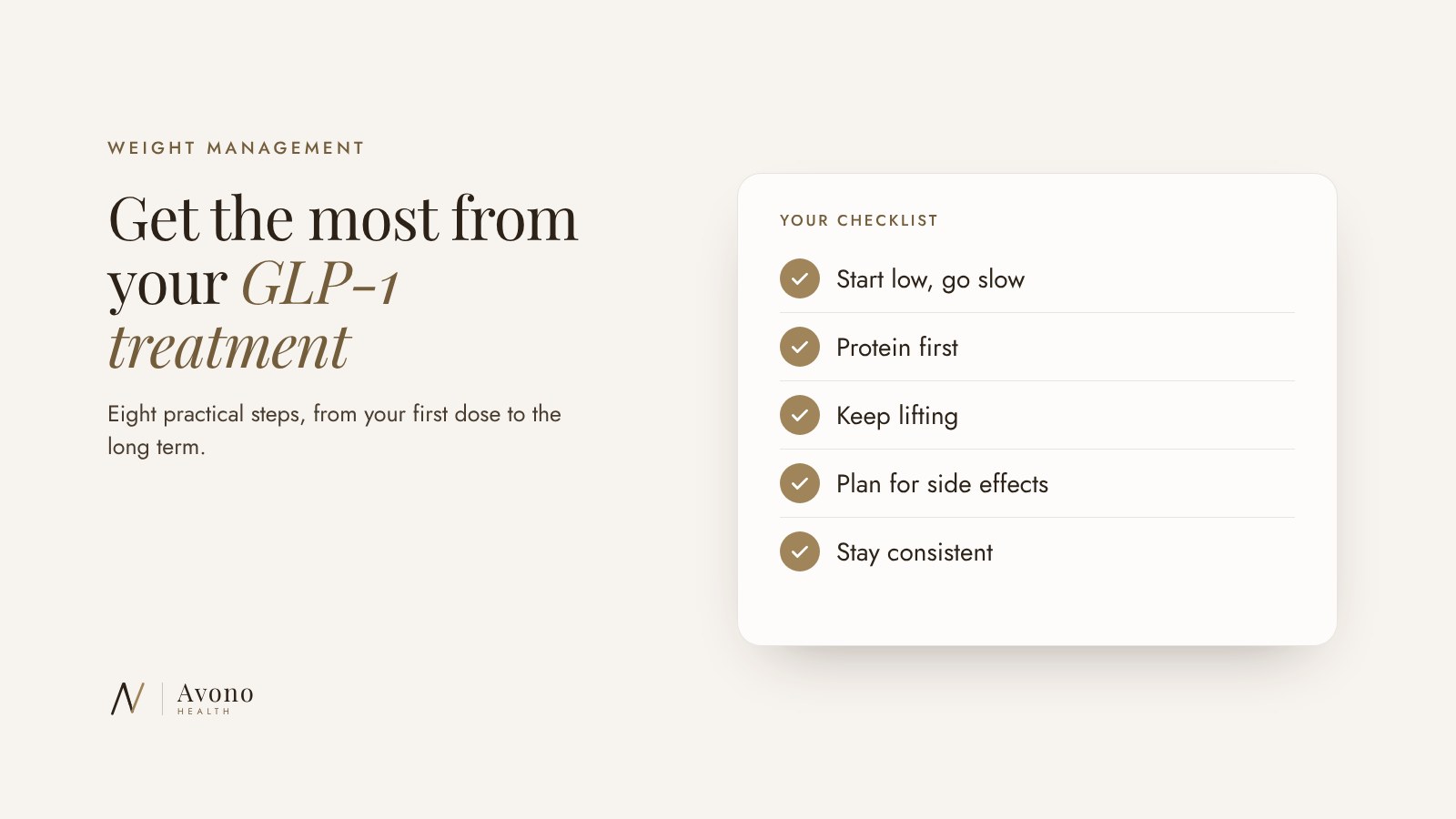
GLP-1 medications like tirzepatide and semaglutide work best when the rest of your routine works with them. The people who do best tend to start slowly, eat in a way that keeps side effects down, protect their muscle and stay consistent. This guide walks through each of those, step by step.
1. Start with the medication that fits you best
Tirzepatide acts on two appetite hormones, GIP and GLP-1, while semaglutide acts on one. In SURMOUNT-5, the first large head-to-head trial of the FDA-approved versions, tirzepatide led to more weight loss on average: 20.2% of body weight compared with 13.7% over 72 weeks.
Important: SURMOUNT-5 studied specific FDA-approved tirzepatide and semaglutide regimens. Compounded versions were not studied in SURMOUNT-5 and are not FDA approved.
For the full comparison, read how to choose between tirzepatide and semaglutide.
2. Start low and go slow
Your clinician starts you on a low dose and raises it gradually over weeks or months. Going slowly gives your body time to adjust and makes stomach side effects easier to manage. Never change your dose on your own; dose changes are your clinician’s decision.
3. Eat in a way that works with the medication
GLP-1 medications slow how quickly your stomach empties, so big or greasy meals can sit heavy. A few habits help most people feel better:
- Build meals around protein such as eggs, Greek yogurt, fish, chicken, beans or tofu.
- Eat smaller meals, slowly, and stop when you first feel full.
- Go easy on fried, greasy and very sweet foods, which are common nausea triggers.
- Drink water through the day and add fiber from vegetables, fruit and whole grains to help with constipation.
- Limit alcohol, which can worsen nausea and adds calories without nutrition.
A 2025 joint advisory from four obesity and nutrition organizations named nutrient-dense meals, enough protein and managing stomach side effects among its top priorities for people on GLP-1 treatment.
4. Protect your muscle
When you lose weight, some of it comes from muscle. Strength training and enough protein help you keep more of it, which matters for strength, balance and keeping the weight off. The same advisory paired adequate protein with strength training to preserve lean mass.
U.S. activity guidelines recommend muscle-strengthening activity at least two days a week. Bodyweight exercises, bands or weights all count. Start where you are and build up.
5. Plan for side effects
Nausea, diarrhea, constipation and reflux are the most common side effects. They are usually mild to moderate, show up most in the first weeks and after a dose increase, and often ease with time.
Contact your clinician right away for severe stomach pain that doesn’t go away (with or without vomiting), vomiting that stops you keeping fluids down, signs of dehydration, or any symptom that worries you. For an emergency, call 911.
One rarer risk to know: sudden, painless vision loss in one eye can be a sign of NAION, and the NAION warning the FDA now requires on every GLP-1 says to contact a health care professional right away.
6. Track more than the scale
Weight moves up and down day to day. Measure your waist, notice how your clothes fit, and pay attention to energy, sleep and cravings. If your clinician orders labs, those count too. Progress often shows up in these places before the scale catches up.
7. Stay consistent, and plan for the long term
Obesity is a chronic condition, and the research is clear that weight often returns when treatment stops. In SURMOUNT-4, adults who lost an average of 20.9% on tirzepatide and then switched to placebo regained 14% of their body weight over the next year, while those who stayed on tirzepatide lost another 5.5%.
That doesn’t mean you can never stop. It means any change should be planned with your clinician, not done abruptly on your own.
8. Keep up with your check-ins
Your clinician uses check-ins to see how you’re doing, adjust your dose and catch problems early. When a check-in is required, complete it on time so your next shipment isn’t held up.
This article is general education, not medical advice. Prescription required. A licensed clinician decides whether treatment is right for you. Compounded tirzepatide and semaglutide are prepared by licensed U.S. pharmacies and are not FDA-approved. Individual results vary.