Skip to content
AvonoHealth

WEIGHT MANAGEMENT

GLP-1 treatment, explained clearly.

Compare semaglutide and tirzepatide, injection and oral options, and standard or lower-dose programs before you begin intake.

You do not need to know the answer before you arrive. Start with the differences that matter.

Not sure yet? Take the quiz in a few questions.

Your secure clinical intake will open in a new tab.

Already know you want a GLP-1? See both medicines, both programs and every current price on one page.

OPTIONS AND PRICING

Popular options, priced upfront.

Transparent pricing, licensed U.S. clinicians and no membership fee. Pick a treatment to start your secure intake, or learn more first.

For men & womenInjection

Semaglutide

Microdose Semaglutide Injection

Active ingredients: Semaglutide

Avono's lower-dose compounded semaglutide injection program.

Why choose it

For people whose clinician recommends staying within Avono's Microdose Program range and who want the lower-priced semaglutide injection program.

$159 per month

No membership fee · No clinician fee · Free shipping

For men & womenInjection

Tirzepatide

Microdose Tirzepatide Injection

Active ingredients: Tirzepatide

Avono's lower-dose compounded tirzepatide injection program.

Why choose it

For people whose clinician recommends staying within Avono's Microdose Program range and who want a lower-dose tirzepatide injection program.

$219 per month

No membership fee · No clinician fee · Free shipping

Your secure clinical intake will open in a new tab.

HOW TO CHOOSE

Compare semaglutide and tirzepatide

Semaglutide

Targets one hormone pathway (GLP-1). The longer-established option, with extensive obesity research and a completed heart-outcomes trial.

Tirzepatide

Targets two pathways (GIP and GLP-1). Produced greater average weight loss than semaglutide when the approved products were compared head to head.

In SURMOUNT-5, a 72-week trial of 751 adults, average weight loss was 20.2% with tirzepatide and 13.7% with semaglutide. That trial used specific FDA-approved products and doses; it does not show that compounded versions will produce the same results.

Compare in more detail

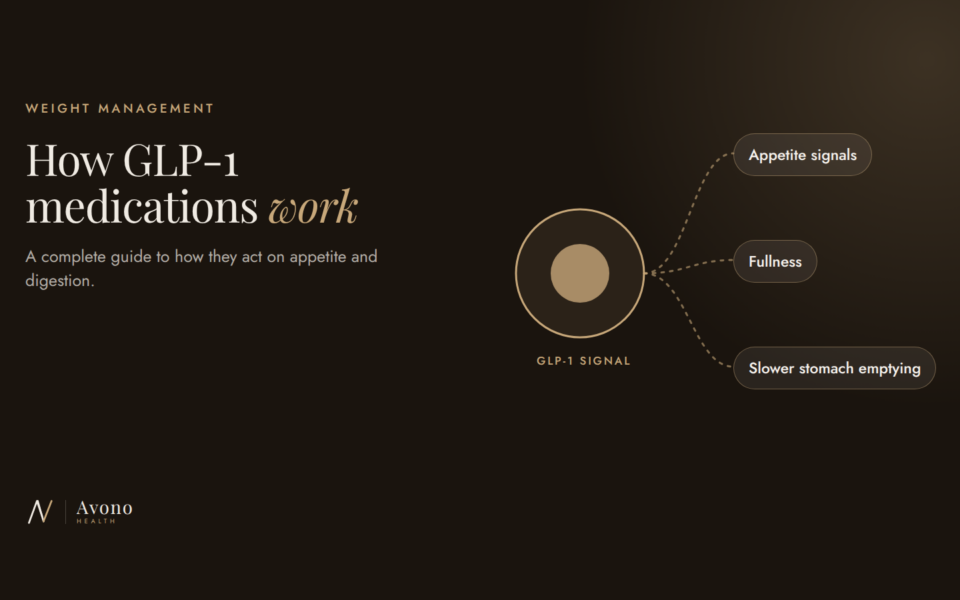
How they work. Semaglutide activates the GLP-1 receptor, which reduces appetite, increases fullness and slows stomach emptying. Tirzepatide activates the GLP-1 receptor and also the GIP receptor, a second gut-hormone pathway involved in appetite and metabolism.

What the evidence says. Both have large placebo-controlled trials: semaglutide 2.4 mg averaged 14.9% weight loss over 68 weeks in STEP 1, and tirzepatide averaged 15.0% to 20.9% over 72 weeks in SURMOUNT-1, depending on dose. SURMOUNT-5 compared them directly (20.2% vs 13.7%), with a larger reduction in waist size for tirzepatide (18.4 cm vs 13.0 cm). Semaglutide 2.4 mg also reduced major cardiovascular events in the SELECT trial of adults with existing heart disease.

Why someone may discuss semaglutide. The longest track record, heart-outcomes evidence for people with cardiovascular disease, a good previous response or tolerance, or simple preference.

Why someone may discuss tirzepatide. Greater average weight loss in the head-to-head trial, an incomplete response to another GLP-1, or interest in a dual-pathway approach.

Tolerability and tradeoffs. Both commonly cause nausea, diarrhea, vomiting and constipation, mostly during dose increases. In SURMOUNT-5 the most common side effects in both groups were gastrointestinal and mostly mild to moderate. Individual response varies, and either can be the better fit.

Formulation context. The results above come from specific FDA-approved products and doses. Compounded formulations are not FDA-approved, and these trials do not establish that they produce the same results. Microdose programs use lower doses than those studied.

Sources: SURMOUNT-5 (NEJM 2025); STEP 1 (NEJM 2021); SURMOUNT-1 (NEJM 2022); SELECT (NEJM 2023).

Semaglutide or tirzepatide?

Semaglutide

Semaglutide is a GLP-1 receptor agonist. FDA-approved injectable semaglutide products have extensive clinical evidence for chronic weight management in appropriate adults. It works by activating GLP-1 receptors involved in appetite, satiety and glucose regulation.

Why someone may choose to discuss it:

  • wants a GLP-1 with a long and established clinical track record
  • has previously responded well to semaglutide
  • prefers semaglutide based on clinician guidance, prior tolerance or cost

Tirzepatide

Tirzepatide activates both GIP and GLP-1 receptors. In studies of the FDA-approved injectable product, it has produced greater average weight loss than semaglutide in head-to-head obesity research, although individual response and tolerability vary.

Why someone may choose to discuss it:

  • wants to compare a dual GIP/GLP-1 approach
  • had an incomplete response to another GLP-1
  • is prioritizing the option with greater average weight loss in approved injectable clinical studies

Injection vs oral

Injection

Weekly injectable GLP-1 treatment has the strongest direct evidence base for weight management. It also provides more predictable systemic delivery than custom oral compounded formats.

Oral

For people who strongly prefer not to inject, compounded oral formats may be available. These are not the same formulation as FDA-approved injectable semaglutide or tirzepatide products, and their absorption and clinical evidence are less established.

What does “microdose” mean?

Avono may offer a separate lower-dose compounded GLP-1 program. Some patients are interested in lower doses because of tolerability, cost or personal preference.

A microdose program should not be presented as equivalent to standard evidence-based obesity dosing. Weight-loss outcomes, side-effect patterns and long-term effectiveness at lower custom doses are less established and depend on the actual dose and formulation prescribed.

HOW IT WORKS

From choosing your treatment to delivery at your door.

  1. Explore your options Compare treatments, formats and pricing.
  2. Complete your secure intake Share your health history, choose the treatment you want to pursue and place a payment method on file.
  3. Clinical review A licensed clinician reviews your information and determines whether treatment is appropriate.
  4. Approved, fulfilled and shipped If prescribed, your authorization is completed, the prescription moves to pharmacy fulfillment and your medication ships to you.
  5. Ongoing support Use your patient portal for clinical communication and reach Avono support for order and account questions.

THE RESEARCH

What the studies measured.

Research on the medicines behind these treatments, including exactly what was studied. Study results describe the products and doses tested. They are not a prediction for any one person or for a compounded formulation.

STEP 1: semaglutide 2.4 mg

What the study found
14.9%
Who was studied
1,961 adults with overweight or obesity, without diabetes
What it means
In the STEP 1 trial, adults receiving studied semaglutide 2.4 mg plus lifestyle intervention lost an average 14.9% of body weight over 68 weeks.
Important context
Study involved a specific semaglutide formulation and dose. Individual results vary. Compounded medications are not FDA-approved. Once-weekly subcutaneous semaglutide plus lifestyle intervention · 2.4 mg once weekly · 68 weeks
Source
Once-Weekly Semaglutide in Adults with Overweight or Obesity N Engl J Med, 2021, PMID 33567185

SURMOUNT-1: tirzepatide 5, 10, 15 mg

What the study found
15.0% to 20.9%
Who was studied
2,539 adults with overweight or obesity, without diabetes
What it means
In SURMOUNT-1, studied tirzepatide doses produced average weight reductions of 15.0% to 20.9% over 72 weeks.
Important context
These findings apply to the formulations, doses and population studied and are not a prediction of results from an Avono compounded treatment. Once-weekly subcutaneous tirzepatide · 5 mg, 10 mg or 15 mg once weekly · 72 weeks
Source
Tirzepatide Once Weekly for the Treatment of Obesity N Engl J Med, 2022, PMID 35658024

WHAT YOU MAY HAVE HEARD

What you may have heard about GLP-1s

Straight answers to the concerns people bring to us: what the research shows, what may help, and when to call your clinician.

Nausea, vomiting, diarrhea and constipation

What people hear. GLP-1s make everyone sick.

What the evidence shows. Stomach-related side effects are the most common. In the approved-product trials, nausea affected 44% of people on semaglutide 2.4 mg (16% on placebo) and 25% to 29% on tirzepatide (8% on placebo). Most cases were mild to moderate, happened during dose increases and often eased with time.

What may help. Smaller meals, eating slowly and stopping when you first feel full. Going easier on greasy or very rich foods. Steady fluids, and fiber with fluids for constipation. Clinicians may slow the pace of dose increases.

When to contact a clinician. Vomiting or diarrhea that does not settle, signs of dehydration such as dizziness or very dark urine, or being unable to keep fluids down.

Muscle and lean-mass loss

What people hear. You lose muscle, not fat.

What the evidence shows. Most weight lost in the trials was fat. In body-composition substudies of STEP 1 and SURMOUNT-1, lean mass fell by about 10% while fat mass fell more (about 19% and 34%), so the share of lean mass in the body went up. Scans count water and organ tissue as lean mass too, not only muscle. Some lean-mass loss happens with most significant weight loss, and how much it affects strength and function is still being studied.

What may help. Protein at every meal, regular strength training if it is appropriate for you, and staying active. Your clinician can suggest what fits your health.

When to contact a clinician. Noticeable weakness, falls, or trouble with everyday activities.

Bone density and fractures

What people hear. GLP-1s weaken your bones.

What the evidence shows. Significant weight loss by any method can be accompanied by some loss of bone density, partly because bones carry less load and partly because nutrition and body composition change. In one randomized trial, adults taking the GLP-1 medicine liraglutide alone lost some hip and spine bone density, while those who combined it with regular exercise did not. Bone-density changes are not the same as fractures, and evidence on fracture risk with GLP-1 treatment is limited and mixed.

What may help. Weight-bearing and strength exercise if appropriate, and enough protein, calcium and vitamin D from food or as your clinician recommends.

When to contact a clinician. A history of osteoporosis or fractures, a fall, or new bone pain.

Gallbladder problems

What people hear. GLP-1s cause gallstones.

What the evidence shows. Rapid weight loss itself raises gallstone risk. A 2022 analysis of 76 randomized trials found GLP-1 medicines were linked to a higher relative risk of gallbladder and bile-duct problems (about 37% higher overall), with more risk at higher doses, longer use and weight-loss doses. These events were still uncommon.

What may help. Knowing the warning signs matters most. Tell your clinician if you have had gallstones before.

When to contact a clinician. Pain in the upper right or middle of the abdomen, especially after eating, fever, or yellowing of the skin or eyes. Severe pain needs urgent care.

Pancreatitis

What people hear. GLP-1s cause pancreatitis.

What the evidence shows. Acute pancreatitis is listed as a warning on the labels. Large randomized trials have generally not shown a clear increase, while some observational studies have: a 2023 insurance-claims study of people using GLP-1 medicines for weight loss reported a higher rate than with another weight-loss medicine, though events were rare and the estimate was uncertain. The risk appears uncommon.

What may help. Tell your clinician about any history of pancreatitis, gallstones, heavy alcohol use or very high triglycerides.

When to contact a clinician. Severe, persistent pain in the upper abdomen that may spread to your back, with or without vomiting, needs urgent care.

Delayed stomach emptying and severe stomach symptoms

What people hear. GLP-1s paralyze your stomach.

What the evidence shows. Slowing stomach emptying is part of how these medicines reduce appetite. Severe or persistent symptoms are uncommon but have been reported, and the same 2023 claims study reported higher rates of gastroparesis and bowel obstruction diagnoses, based on small numbers. The labels warn about severe stomach reactions, and the medicines are not recommended for people with severe gastroparesis.

What may help. Small meals and stopping when full. Tell the care team before any surgery or procedure that uses sedation, because food may stay in the stomach longer.

When to contact a clinician. Vomiting that will not stop, being unable to keep food or fluids down, severe bloating or abdominal pain, or no bowel movement with pain.

Hair shedding

What people hear. GLP-1s make your hair fall out.

What the evidence shows. Hair loss was reported slightly more often than with placebo in the approved-product trials: about 3% vs 1% with semaglutide 2.4 mg, and 4% to 5% vs 1% with tirzepatide. Shedding after rapid or large weight loss (telogen effluvium) is a recognized pattern with weight loss of any cause and is usually temporary.

What may help. Enough protein and a balanced diet, gentle hair care, and patience: this kind of shedding usually settles within months.

When to contact a clinician. Heavy or patchy hair loss, or shedding that lasts more than about six months.

Stopping treatment and weight regain

What people hear. The weight all comes back when you stop.

What the evidence shows. Often a good part of it does. One year after stopping semaglutide in the STEP 1 extension, participants had regained about two-thirds of the weight they had lost. In SURMOUNT-4, people switched from tirzepatide to placebo regained about 14% of body weight over the next year, while those who continued kept losing. Obesity behaves like a long-term condition.

What may help. Planning with your clinician for what comes next, and building eating and activity habits during treatment that you can keep.

When to contact a clinician. Before stopping or changing treatment, or if cost or side effects make continuing hard.

The thyroid warning

What people hear. GLP-1s cause thyroid cancer.

What the evidence shows. Semaglutide and tirzepatide carry a boxed warning because they caused thyroid C-cell tumors in rodents. It is not known whether they cause these tumors in people. They are not used in anyone with a personal or family history of medullary thyroid carcinoma or multiple endocrine neoplasia type 2 (MEN 2).

What may help. Share your personal and family history during intake so the clinician can check.

When to contact a clinician. A lump or swelling in the neck, trouble swallowing, persistent hoarseness or shortness of breath.

General education, not medical advice. Do not change or stop your medication without talking to your clinician. The figures above come from studies of FDA-approved products and doses, not compounded formulations.

Sources: Wegovy label; Zepbound label; STEP 1 (NEJM 2021); SURMOUNT-1 (NEJM 2022); STEP 1 extension (2022); SURMOUNT-4 (JAMA 2024); He 2022 (JAMA Intern Med); Sodhi 2023 (JAMA); Jensen 2024 (JAMA Netw Open).

Common side effects

For GLP-1/GIP-GLP-1 treatments, commonly reported side effects include:

  • nausea
  • diarrhea
  • vomiting
  • constipation
  • abdominal discomfort
  • indigestion / reflux
  • decreased appetite

Important safety considerations may include:

  • history of medullary thyroid carcinoma or MEN2
  • pancreatitis
  • gallbladder disease
  • dehydration / kidney injury risk
  • severe gastrointestinal disease
  • pregnancy
  • interactions and delayed gastric emptying

The clinician evaluates these during intake.

FIND YOUR OPTIONS

Find your GLP-1 options

Answer three quick questions and we'll narrow the options by medication, format and program. A clinician decides what is medically appropriate.

Related reading

See your options. Know the price. Start when you’re ready.

Explore the details or start your secure intake today. Clear treatment pricing, with no membership fee.