Erectile dysfunction is often treated like an isolated bedroom problem.
It is not always one.
Difficulty getting or maintaining an erection can be influenced by stress, anxiety, relationships and sexual performance concerns.
But erections also depend on blood vessels, nerves, hormones and cardiovascular function.
That means erectile dysfunction can sometimes provide useful information about health beyond sex.
Ignoring persistent ED because it feels embarrassing may mean ignoring something worth discussing with a clinician.
What exactly counts as erectile dysfunction?
Erectile dysfunction, commonly shortened to ED, means consistently having difficulty obtaining or maintaining an erection firm enough for sexual activity.
It does not necessarily mean being completely unable to get an erection.
ED can look like:
Getting an erection sometimes but not consistently.
Getting an erection but losing it sooner than desired.
Having adequate erections during masturbation or sleep but difficulty with a partner.
Needing substantially more stimulation than before.
Or being unable to obtain an erection at all.
NIDDK estimates that tens of millions of men in the United States experience erectile dysfunction. It becomes more common with age, but it should not simply be dismissed as an unavoidable part of getting older.
An erection is a vascular event
Blood flow is central to erectile function.
Sexual stimulation triggers signals that cause blood vessels in erectile tissue to relax and allow increased blood flow into the penis.
If the vascular system is not functioning well, erections may be affected.
This creates an important connection between erectile dysfunction and cardiovascular health.
The American Urological Association specifically advises clinicians to counsel patients that ED can be a risk marker for cardiovascular disease and other underlying health conditions.
That does not mean every person with ED has heart disease.
It means persistent ED should not automatically be treated as an isolated mechanical issue.
What medical conditions can contribute to ED?
Many can.
NIDDK identifies conditions including cardiovascular disease, high blood pressure, diabetes, obesity, kidney disease, hormonal disorders and neurologic conditions among potential contributors.
Some of those conditions can affect blood vessels.
Others affect nerves.
Some affect hormone signaling.
And several can do more than one.
This is why medical evaluation matters even when the immediate goal is simply improving sexual performance.
Diabetes and erectile dysfunction
Diabetes deserves particular attention.
Chronically elevated blood sugar can damage blood vessels and nerves, both of which are important for normal erectile function.
NIDDK notes that men with diabetes can develop erectile dysfunction earlier than men without diabetes and that managing blood glucose and cardiovascular risk factors can be an important part of the broader picture.
Medication may improve erectile response.
But if diabetes or vascular disease is contributing, addressing the underlying condition matters too.
Can medications cause ED?
Yes.
Medications associated with erectile difficulties can include certain:
- antidepressants
- blood-pressure medications
- diuretics
- sedatives
- hormone treatments
- pain medications
That does not mean you should stop a prescription medication because you suspect it is affecting sexual function.
Stopping some drugs abruptly can create much larger problems.
Instead, tell your clinician what you are experiencing and provide an accurate medication list.
What about anxiety?
An erection involves the nervous system as well as blood flow.
Performance anxiety can interfere with sexual response even in a physically healthy person.
One difficult sexual experience can also create a feedback loop:
Something does not work as expected.
You worry it will happen again.
That worry becomes part of the next sexual experience.
The increased anxiety makes erectile difficulty more likely.
Then the experience reinforces the anxiety.
This does not mean the problem is “all in your head.”
Physical and psychological factors frequently overlap.
The AUA guideline specifically recognizes anxiety, depression, relationship conflict and psychosexual issues as potential contributors to ED.
Can low testosterone cause erectile dysfunction?
Hormones can contribute, but testosterone is not the explanation for every erectile problem.
Low testosterone may affect sexual desire and can contribute to ED in some men.
The AUA recommends morning total testosterone measurement as part of the evaluation of men presenting with erectile dysfunction.
But ED is often primarily vascular, neurologic, medication-related or multifactorial.
Someone should not assume they need testosterone because erections have changed.
How do sildenafil and tadalafil treat ED?
Sildenafil and tadalafil are PDE5 inhibitors.
They enhance the normal signaling pathway that supports increased blood flow during sexual stimulation.
They do not create sexual desire and do not produce an automatic erection without arousal.
The AUA recommends discussing FDA-approved oral PDE5 inhibitors with appropriate patients unless there is a contraindication.
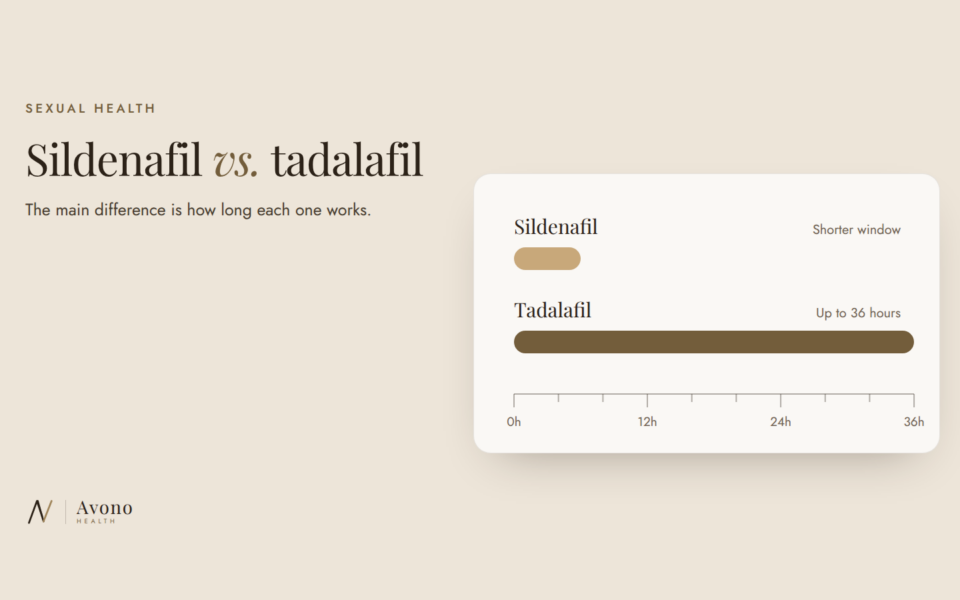
Sildenafil is generally used as needed around sexual activity.
Tadalafil can be used as needed and also has an FDA-approved daily regimen.
Why can ED medication fail?
Taking a tablet and not getting the desired result once does not always mean the medication is ineffective.
Factors can include:
Timing.
Dose.
Heavy meals in the case of sildenafil.
Insufficient sexual stimulation.
Alcohol.
Anxiety.
Underlying disease.
Medication interactions.
The severity of erectile dysfunction.
Incorrect expectations.
The AUA specifically recommends that patients prescribed PDE5 inhibitors receive instructions designed to maximize appropriate use and effectiveness.
Proper use matters.
ED medication is not safe for everyone
The most important example is nitrate medication.
Sildenafil and tadalafil are contraindicated with nitrates because the combination can cause a dangerous drop in blood pressure.
Clinicians may also need to consider cardiovascular status, blood-pressure medications, alpha blockers, kidney or liver function and other factors.
That is why buying prescription ED medication from an unknown online source with no meaningful health review defeats one of the most important parts of treatment.
The medical intake is not paperwork standing between you and a pill.
It is part of the safety process.
When should ED be evaluated?
A single off night does not necessarily represent a medical condition.
Sleep deprivation, alcohol, anxiety, relationship stress and many temporary factors can affect sexual response.
Persistent or recurrent changes deserve more attention.
That is particularly true if erectile dysfunction begins unexpectedly or occurs alongside symptoms involving exercise tolerance, chest discomfort, metabolic health, libido or other health changes.
ED is treatable.
But treatment should not prevent someone from asking why the problem is happening in the first place.
Why telehealth can make this conversation easier
Sexual health can be uncomfortable to discuss.
That discomfort causes some people to put off care.
A private telehealth intake can lower that barrier while still allowing a licensed clinician to review relevant health information and determine whether prescription treatment is appropriate.
Avono’s sexual-health pathway requires clinician review rather than treating ED medication as an ordinary e-commerce purchase.
That distinction matters.
The goal is convenience without removing the medical part of medical treatment.
The bottom line
Erectile dysfunction is common.
It is also often treatable.
Medications such as sildenafil and tadalafil can be effective for many appropriate patients.
But persistent ED can also be connected to cardiovascular disease, diabetes, medication effects, hormonal conditions, anxiety, neurologic issues or several factors at once.
Treating the symptom and understanding the possible cause should not be viewed as competing goals.
You can do both.
Frequently Asked Questions
Is erectile dysfunction normal with age?
ED becomes more common with age, but it is not considered an unavoidable or normal consequence that should simply be ignored.
Can ED be a sign of heart disease?
ED can be a cardiovascular risk marker because erectile and cardiovascular health share several vascular risk factors.
Can anxiety cause erectile dysfunction?
Yes. Anxiety and performance concerns can contribute to ED or make existing physical ED worse.
What medications treat erectile dysfunction?
PDE5 inhibitors such as sildenafil and tadalafil are common FDA-approved oral treatments when medically appropriate.
Should younger men with ED talk to a doctor?
Persistent ED at any adult age can be worth discussing with a healthcare professional, particularly when the change is new or unexplained.